
EV Conversion FAQ’s
If you're exploring electric power for a classic Land Rover, these FAQ's break down what EV ownership really looks like day to day.
Electric Car Ownership
Charging time depends on:
· Battery size (kWh)
· Charger power (kW)
· Starting charge level (charging slows as it gets closer to full)
As a simple guide:
Time (hours) = Battery Size (kWh) ÷ Charger power (kW)
Real-world charging can be slower due to temperature, battery management, and the fact that charging typically tapers near full.
Typical charging times (10–80%) — quick guide
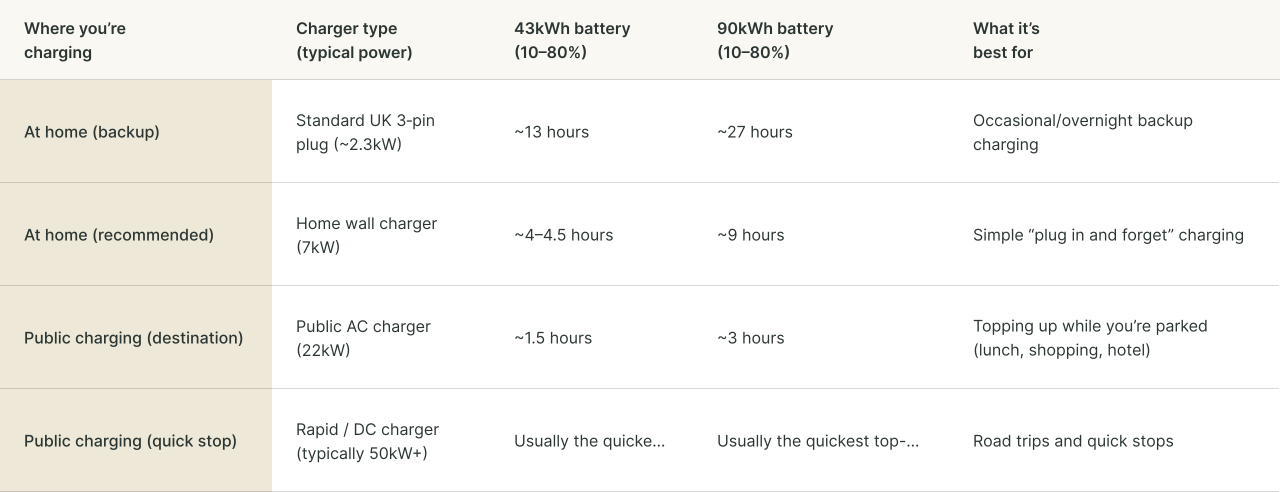
A quick note on the numbers: these are rough, real-world guides for going from 10% to 80%. Weather, charger availability, and battery temperature can all make charging a bit faster or slower.
Why we quote 10–80%
That’s the “sweet spot” for EV charging. Most EVs charge fastest up to around 80%, then slow down for the last bit. So 10–80% is the most useful way to think about charging in real life — especially when you’re out and about using public chargers.
Because it’s not how most people actually charge.
The last 20% (from 80% to 100%) usually takes noticeably longer than you’d expect — that’s normal behaviour designed to look after the battery. So quoting 0–100% times can make charging sound worse than it feels day-to-day.
That’s why we use 10–80%: it’s the most helpful benchmark for planning and gives a much more realistic picture of typical charging.
Yes — it works, but it’s best as a backup option.
As a guide for a 10–80% top-up:
· 43kWh battery: around 13 hours
· 90kWh battery: around 27 hours
If you want easy day-to-day charging, a 7kW home wall charger is the way to go.
For most owners, yes. Home charging is the “easy mode” of EV ownership — you plug in at home and the vehicle is ready when you are.
Typical 10–80% times on a 7kW home charger:
· 43kWh: around 4–4.5 hours
· 90kWh: around 9 hours
Yes — all else being equal, a bigger battery takes longer because there’s more energy to put back in.
The upside is that a larger battery can mean charging less often, depending on how you use the vehicle.
EVs typically charge fastest when the battery is lower, then slow down as it approaches full to protect battery health and manage temperature.
That’s why many drivers don’t always aim for 100% on public chargers — they’ll often charge to a sensible level and continue their journey.

Winter and Cold Weather
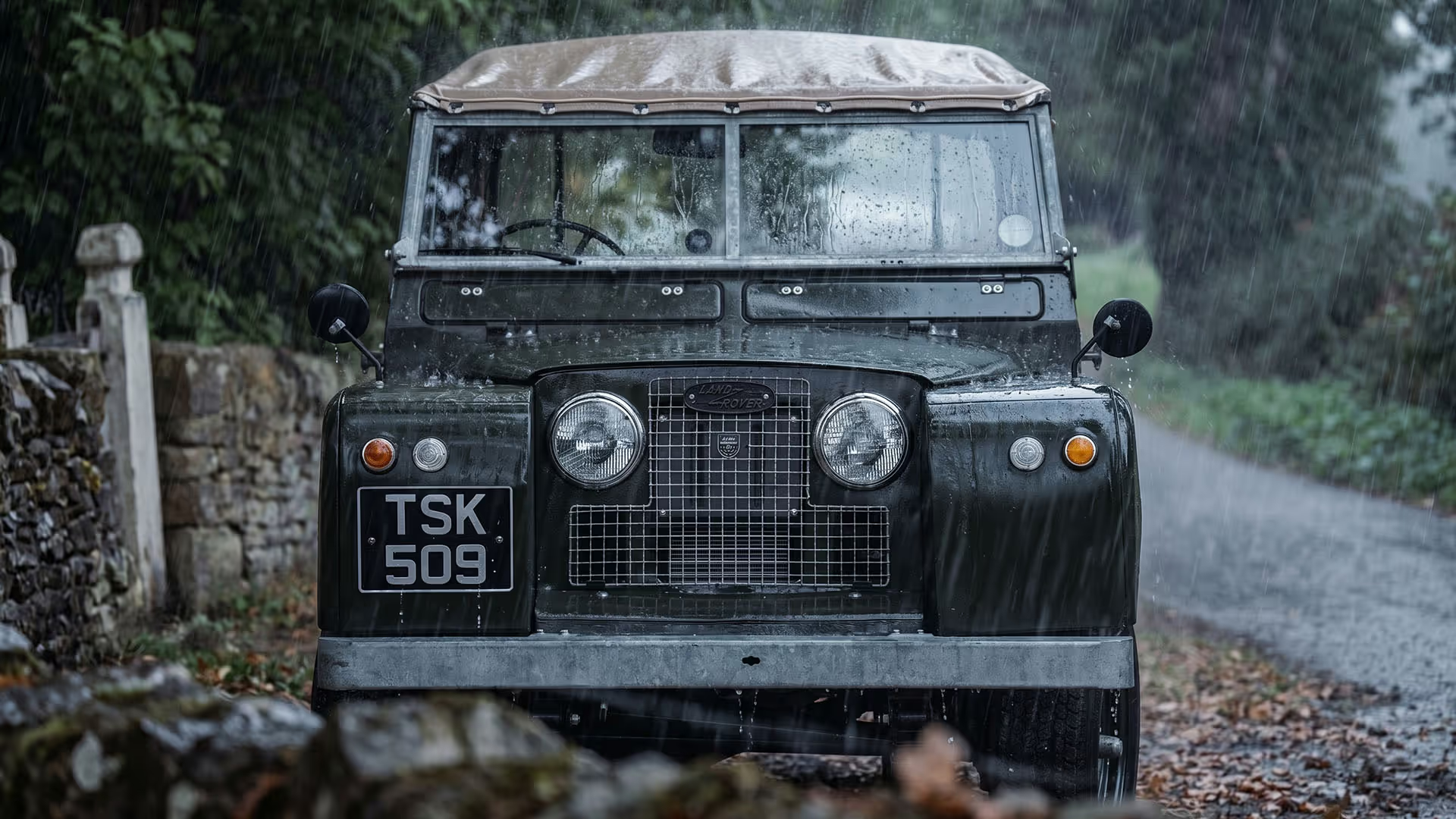
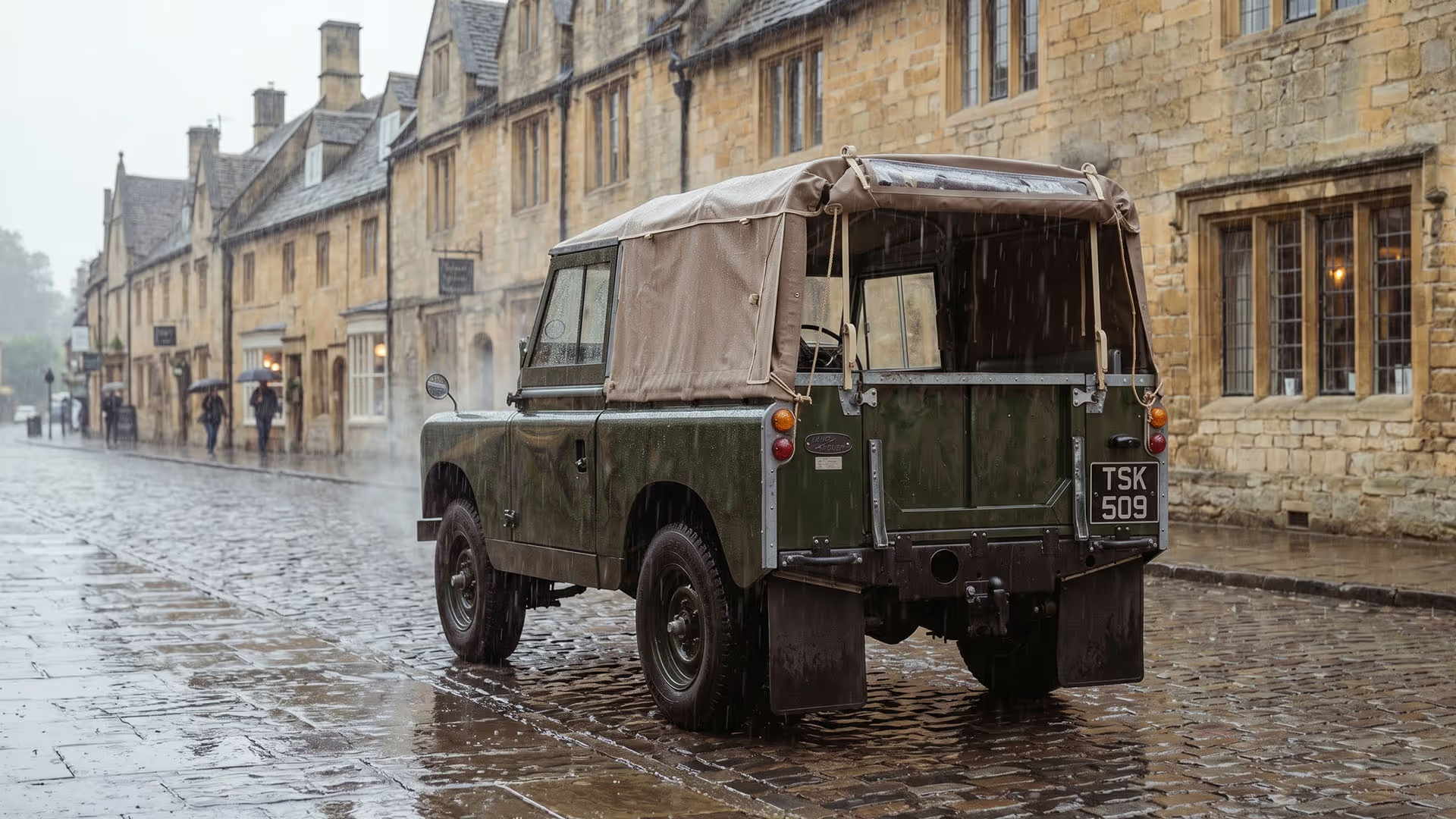
Winter driving expectations (Cotswolds, premium countryside)
There’s something special about a winter run through the Cotswolds — crisp air, quiet lanes, and that unhurried sense of escape. Like any EV, range can dip in colder weather (especially if you’re keeping the cabin warm), so we recommend planning longer drives with a little extra margin. Do that, and winter becomes one of the best seasons to enjoy the car: smooth, quiet progress, instant torque, and the freedom to take the scenic route.
Yes — just like any EV, you’ll typically see less range in cold weather. It’s completely normal and nothing to worry about — it just means winter drives benefit from a little more planning.
Cold conditions reduce range mainly because:
· Batteries are less efficient when they’re cold
· The car uses extra energy to warm the cabin
· Winter roads and air conditions can add a bit more resistance
It varies depending on temperature, speed, and how much cabin heat you use — but independent testing shows the drop can be noticeable in proper cold conditions.
A good way to think about it for recreational use is:
· Mildly cold days: you may only notice a modest reduction
· Proper winter cold + heater on: expect a more meaningful drop, especially on longer drives
If your Land Rover is mostly used for weekend runs, events, and countryside drives, the main takeaway is simple: winter range is still very usable — just plan your route with a bit more margin.
In a classic petrol Land Rover, cabin heat is basically “free” waste heat from the engine.
In an EV, heat has to be generated using electrical energy from the battery — so if you’re toasty-warm inside on a freezing day, some of that energy is coming from the same place that powers the wheels.
Yep — a few small habits make winter EV driving feel effortless:
Pre-warm the cabin while plugged in
If you can, warm the vehicle before you set off. You start comfortable, and you preserve more battery for the drive.
Treat winter drives like a great day out (with a plan).
Pick a route you love, know where you could stop if you want to, and keep a little buffer — it’s the relaxed way to do it.
Use comfort features efficiently.
Heated seats (if fitted) can keep you comfortable with less energy than blasting hot air constantly.
Expect charging to be a bit less “snappy” when it’s very cold.
Rapid charging can start slower if the battery is cold, then improve as things warm up.
It can. In very cold conditions the vehicle may limit charging speed until the battery warms up. That’s why winter rapid-charging can sometimes feel slower at the start of a session — it’s normal battery protection behaviour.

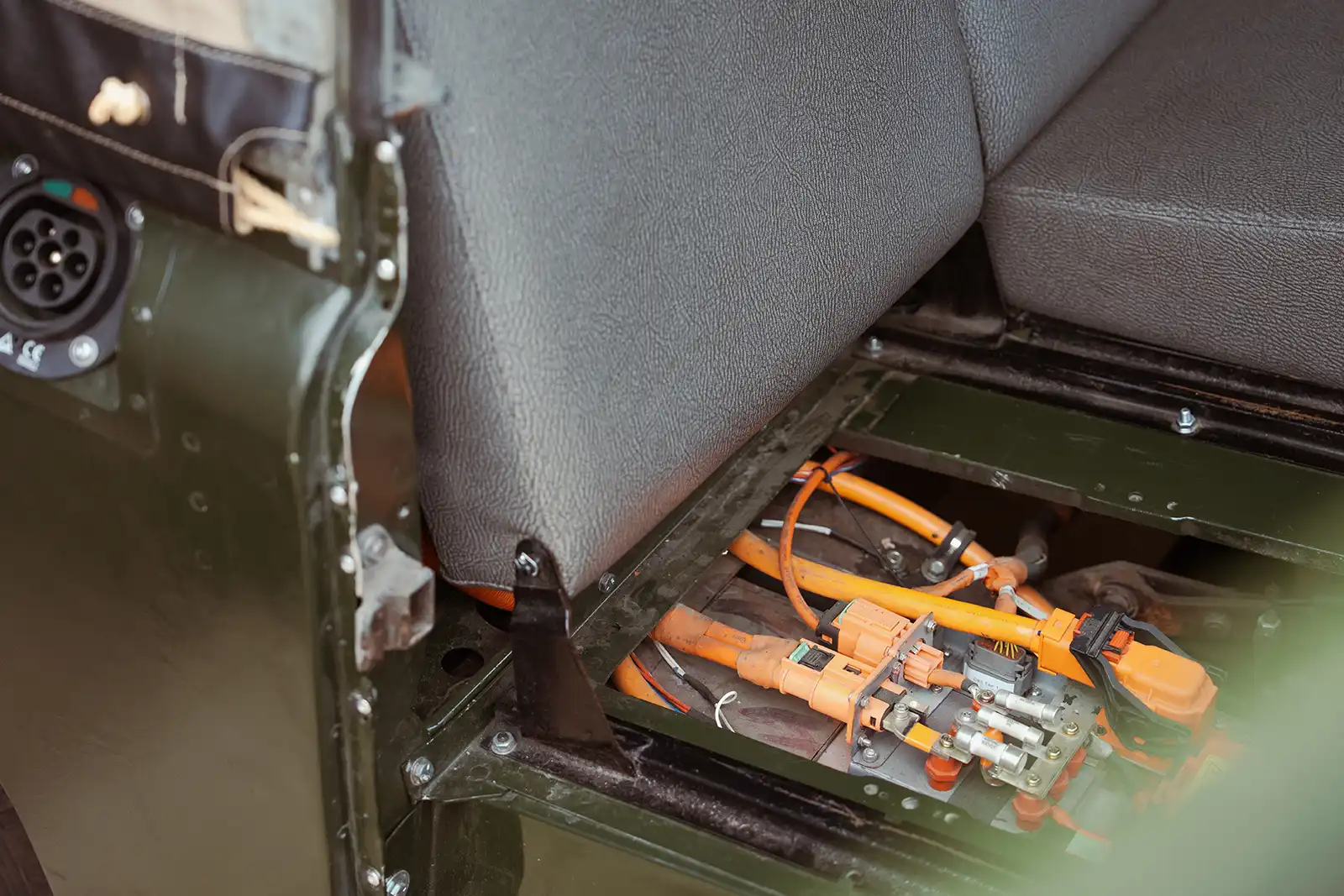
Servicing and Maintenance
Yes — but typically less than a petrol classic.
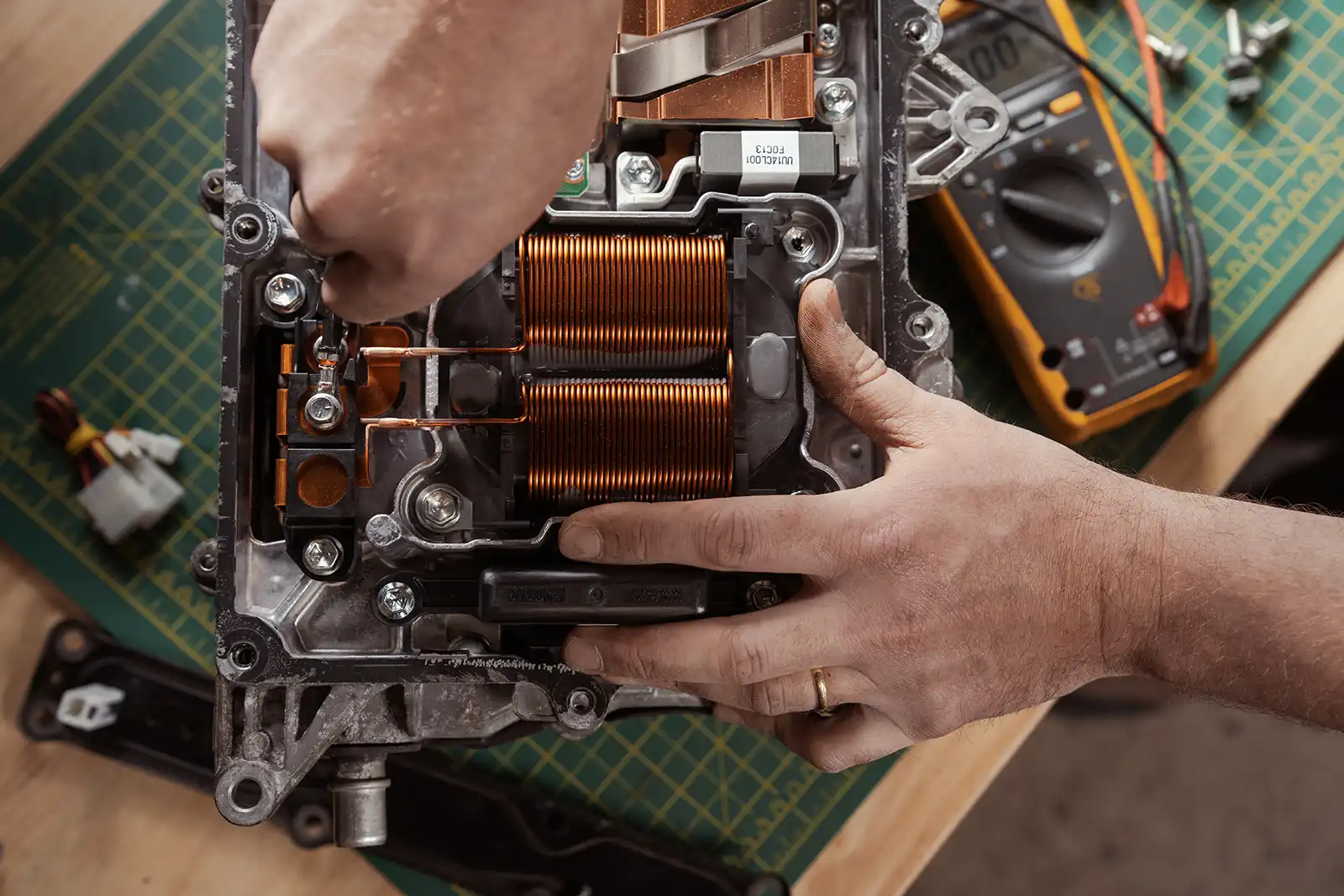
An electric drivetrain has far fewer moving parts than an internal combustion engine, so there’s no routine engine servicing (oil changes, filters, plugs, exhausts, etc.). For most owners, that means less ongoing maintenance and fewer unexpected “classic engine” issues.
What remains is the normal upkeep you’d expect from any well-looked-after classic Land Rover: brakes, tyres, suspension, steering, and general checks.
Compared to a petrol Land Rover, you typically eliminate:
· Engine oil and filter changes
· Spark plugs and ignition servicing
· Fuel system maintenance (filters, pumps, carb/injection issues)
· Exhaust repairs and replacements
· Many of the common leak/heat-related engine problems
In short: fewer consumables, fewer service items, fewer failure points.
Think of it in two parts:
The classic vehicle (maintained as normal):
· Brakes (pads/discs and brake fluid changes)
· Tyres, alignment, wheel bearings
· Suspension and steering components
· Chassis/body checks and corrosion prevention
· Wipers, lights, seals, hinges, etc.
The EV system (usually lighter-touch):
· Visual checks of high-voltage cabling and connectors
· Cooling system checks (if your setup uses liquid cooling)
· Diagnostics / health checks to confirm everything is operating as it should
For recreational use, many owners opt for a simple annual inspection (or a pre-season check before spring/summer driving).
Yes. We offer an Inspection and Service Package designed specifically for EV-converted classics.
It’s focused on:
· A full safety and condition inspection (classic vehicle + EV system)
· Key fluid checks (where applicable)
· Diagnostic checks and a written summary of findings
· Advice on anything to keep an eye on before your next season of driving
Pricing depends on the vehicle and scope, so we keep it bespoke — but it’s designed to be straightforward and good value for peace of mind.
In most cases, yes — mainly because the drivetrain is simpler. You’re swapping a complex, ageing engine and fuel system for an electric drivetrain with fewer moving parts and less routine servicing. You still maintain the vehicle like any classic, but the day-to-day ownership experience is often more dependable and less “fiddly.”
Batteries don’t have “servicing” in the traditional sense. The most useful thing is an occasional battery health/diagnostic check, which can be included as part of an inspection.
For many owners using the car for weekends and events, that usage profile can be very gentle on the battery.
For most routine work (brakes, tyres, suspension, steering), a good classic/4x4 workshop can help.
For anything involving the high-voltage system, it’s best handled by an EV conversion specialist (or a workshop trained and equipped for high-voltage work). We’ll always advise what’s appropriate and can support with diagnostics.
Often, yes. Regenerative braking can reduce how much you rely on the friction brakes in normal driving, which may reduce pad wear.
You still need brakes maintained properly — it’s a Land Rover, and safety always comes first — but many owners find brake wear is reduced in typical road use.
Absolutely. Clear records matter with any classic, and they’re especially reassuring with a conversion.
Keeping a simple file of inspections, any maintenance work, and system checks helps protect value and makes the car easier to sell in future.
- AAA Newsroom (2019): “Icy Temperatures Cut Electric Vehicle Range Nearly in Half”
- U.S. Department of Energy (2024): “Impact of Cold Ambient Temperature on BEV Performance” (PDF)
- NREL (National Renewable Energy Laboratory) (PDF): cold-weather EV considerations
More Questions?
We're here to help