

This is interesting news: Recurrent — 1 Billion Miles Later: What Our Data Really Says About EVsSo yes, battery degradation is real, but it’s nowhere near as scary as people make out—especially on newer EVs.
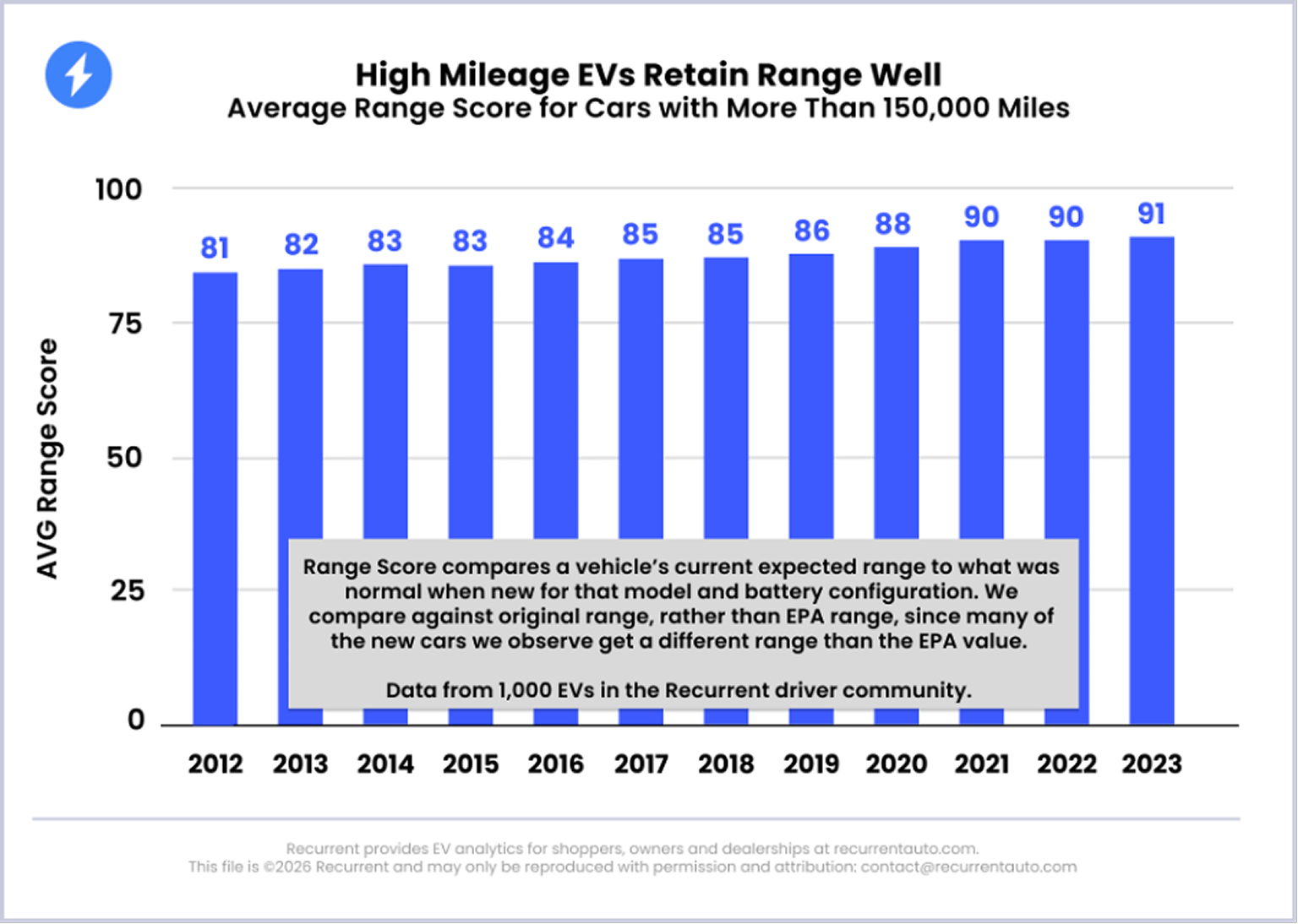
Recurrent, who track thousands of cars via telematics looked at around 1,000 EVs that have done 150,000 miles and compared their actual range now versus when they were new (not the brochure/EPA numbers). The headline takeaway: newer cars are holding onto their range far better than early EVs. In Recurrent’s chart, the oldest high-mileage cars (around 2012) average about 81% range retention, while 2023 cars are closer to 91%—same mileage, less loss. That’s down to better battery chemistry, smarter thermal management, and manufacturers leaving more buffer in the packhave made third-generation electric car tech extremely dependable.
“In Recurrent’s chart, the oldest high-mileage cars (around 2012) average about 81% range retention, while 2023 cars are closer to 91%—same mileage, less loss.”
They also point out that outright battery replacements are becoming rare on modern EVs. Recurrent’s numbers suggest only 0.3% of “Gen 3” EVs (roughly 2022-onwards) have needed a battery replacement so far, versus 2% for 2017–2021 cars and 8.5% for early mass-market EVs (excluding recalls). And when issues do happen, it’s often a manufacturing defect handled via recall—plus replacement costs have come down a lot over the last decade.
This is why I’m happy to offer a 1 year RTB warranty on our electric conversions!
Source: Recurrent — 1 Billion Miles Later: What Our Data Really Says About EVs